
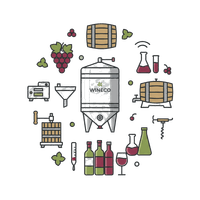
From Vine to Bottle
The complete guide to home winemaking — equipment, technique, and the deeply satisfying art of crafting your own vintage
There is something elemental about making wine at home — a reconnection to one of humanity's oldest agricultural practices, a direct engagement with the transformation that has fascinated and sustained civilizations for eight millennia. Modern home winemaking equipment has made that practice more accessible and more technically achievable than at any previous point in history.
The entry point to home winemaking is modest. A basic kit — a food-grade plastic fermentation vessel, an airlock, a hydrometer for measuring sugar levels, a siphon hose for racking, and a supply of yeast, nutrients, and sulfite — represents an investment of under $100 and allows the production of serviceable table wine from grape juice concentrate or fresh grapes when available.
For those who commit more seriously, the equipment investment deepens productively. Stainless steel or glass secondary fermentation vessels provide better temperature control and easier cleaning than plastic. A small press dramatically improves juice extraction from fresh grapes and elevates quality at every level. Oak alternatives — cubed oak, spirals, staves, or small barrels — introduce the complexity of oak aging to home-scale production at a fraction of the cost of commercial barrel programs.
Fresh grapes, when accessible, are the home winemaker's greatest advantage. Many regions support crush events where enthusiasts purchase high-quality wine grapes at harvest, sometimes from the same vineyards that supply commercial producers. The quality differential between concentrate-based and fresh-grape home wines is remarkable: both are wine, but one is genuinely closer to what the craft can achieve.
Making wine at home is both a technical discipline and a philosophical one — a commitment to understanding the process that makes the glass in your hand possible.
“Making wine at home is a reconnection to one of humanity's oldest agricultural practices — and modern equipment makes it more technically achievable than ever before.”