
What the Glass Reveals
The science and art of reading wine through color — from the first pour to the final fade at the rim
Color is wine's first communication — immediate, visible before the glass is even raised, and extraordinarily informative to those trained to read it. Professional tasters use a white background, holding the glass at a 45-degree angle, to evaluate both the core color and the rim variation that reveals so much about age and variety.
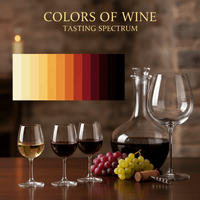
In white wines, color ranges from the near-water clarity of a very young, unoaked wine through the pale yellow-green of classic unoaked Chardonnay, the golden yellow of barrel-aged whites and warmer-climate wines, to the deep amber of oxidatively aged wines — Vin Jaune, Madeira, aged White Rioja — or botrytis-affected dessert wines like Sauternes. As white wines age, they gain color; the young straw-yellow deepens toward honey and eventually to amber.
Red wines communicate through a different palette. Young reds display a vivid ruby or purple-red, particularly at the rim, which shows the wine's vibrancy and freshness. As the wine ages, the anthocyanins polymerize and fall as sediment; the remaining color shifts from red through brick to garnet and eventually to the tawny, onion-skin tones of a very aged wine. The depth of color also speaks to variety: the deep, opaque black-purple of young Syrah, Malbec, and Monastrell contrasts with the translucent, garnet-red of great Pinot Noir or aged Sangiovese.
Rosé occupies its own chromatic range — from the palest Provençal blush to the deep copper-salmon of a barrel-aged Bandol — and its color speaks primarily to how long the grape skins were in contact with the juice during winemaking.
To look at wine before drinking it is not ceremony; it is information.
“To look at wine carefully before drinking it is not ceremony — it is information, written in color across the full range of human sensory experience.”